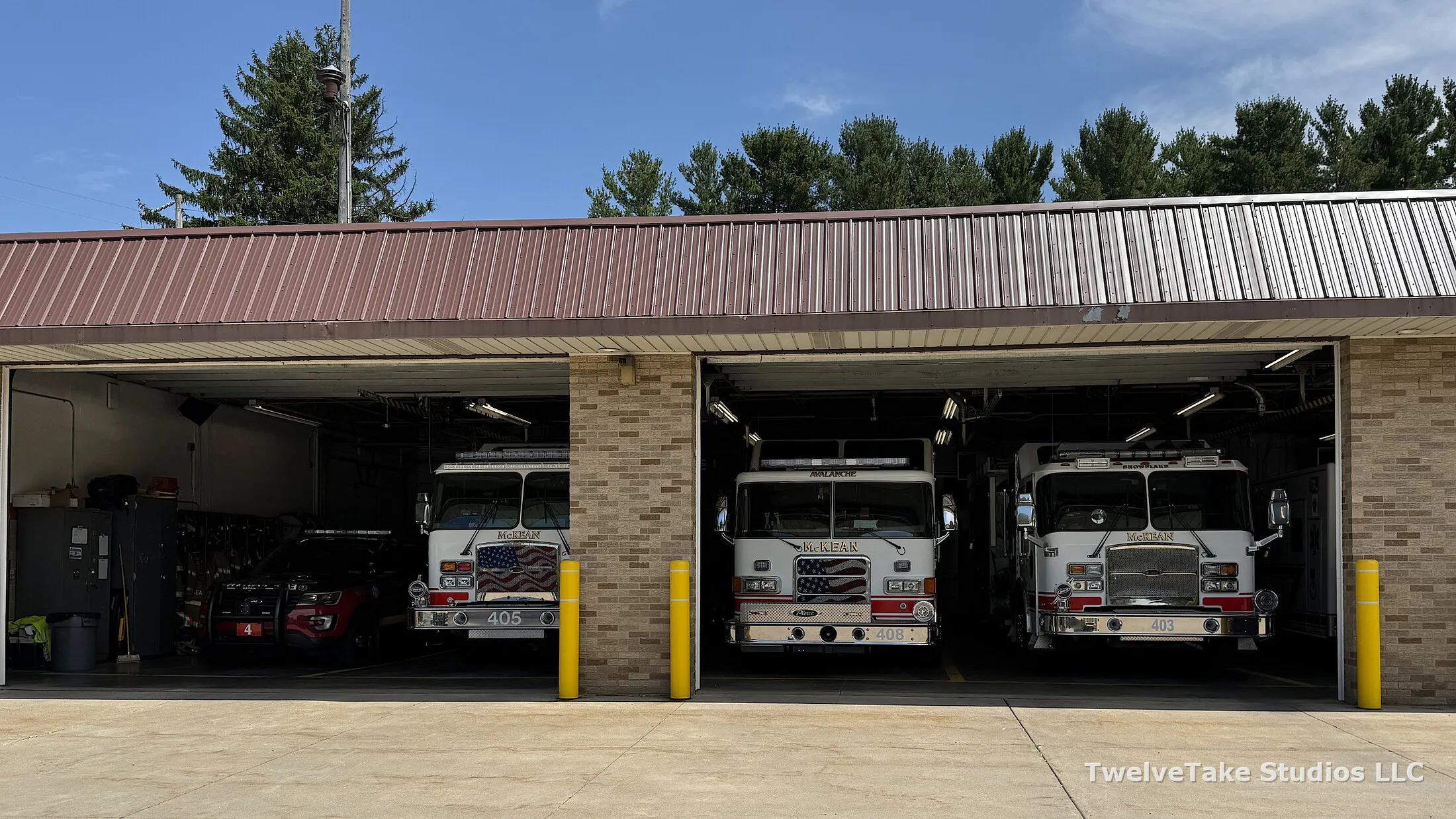
McKean Hose Company
Apparatus
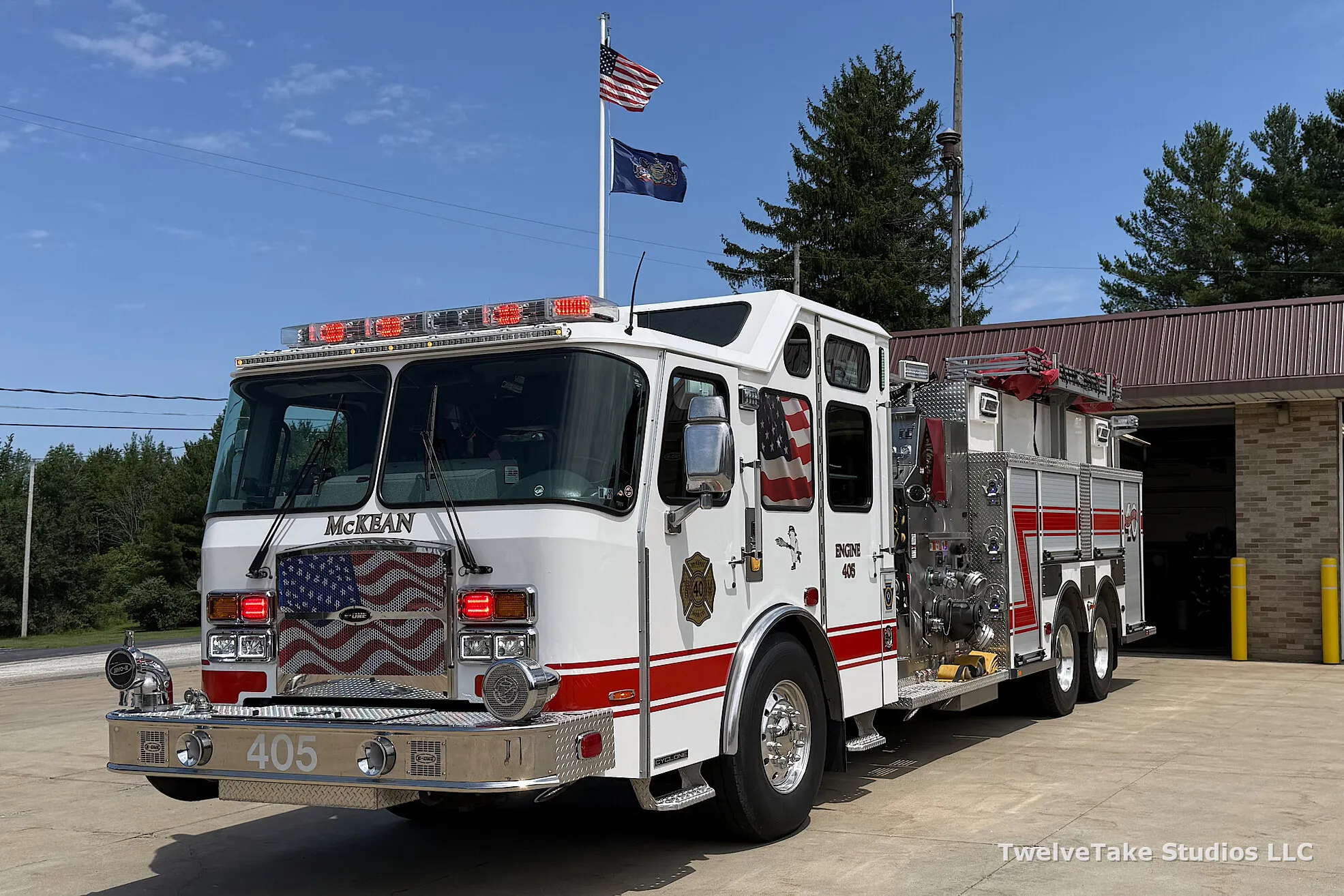
Engine 405
- Year
- 2020
- Chassis
- E-One Cyclone II 6x4
- Pump
- 2,000 gallons per minute
- Tank
- 2,000 gallons
This is usually the first thing out the door. It carries our water, the pump to push it, and the hose to get it where it has to go. That's why an engine handles most of what we get called for. There's a national standard for what you can even call an engine: the pump has to move 750 gallons a minute and the tank has to hold 300.
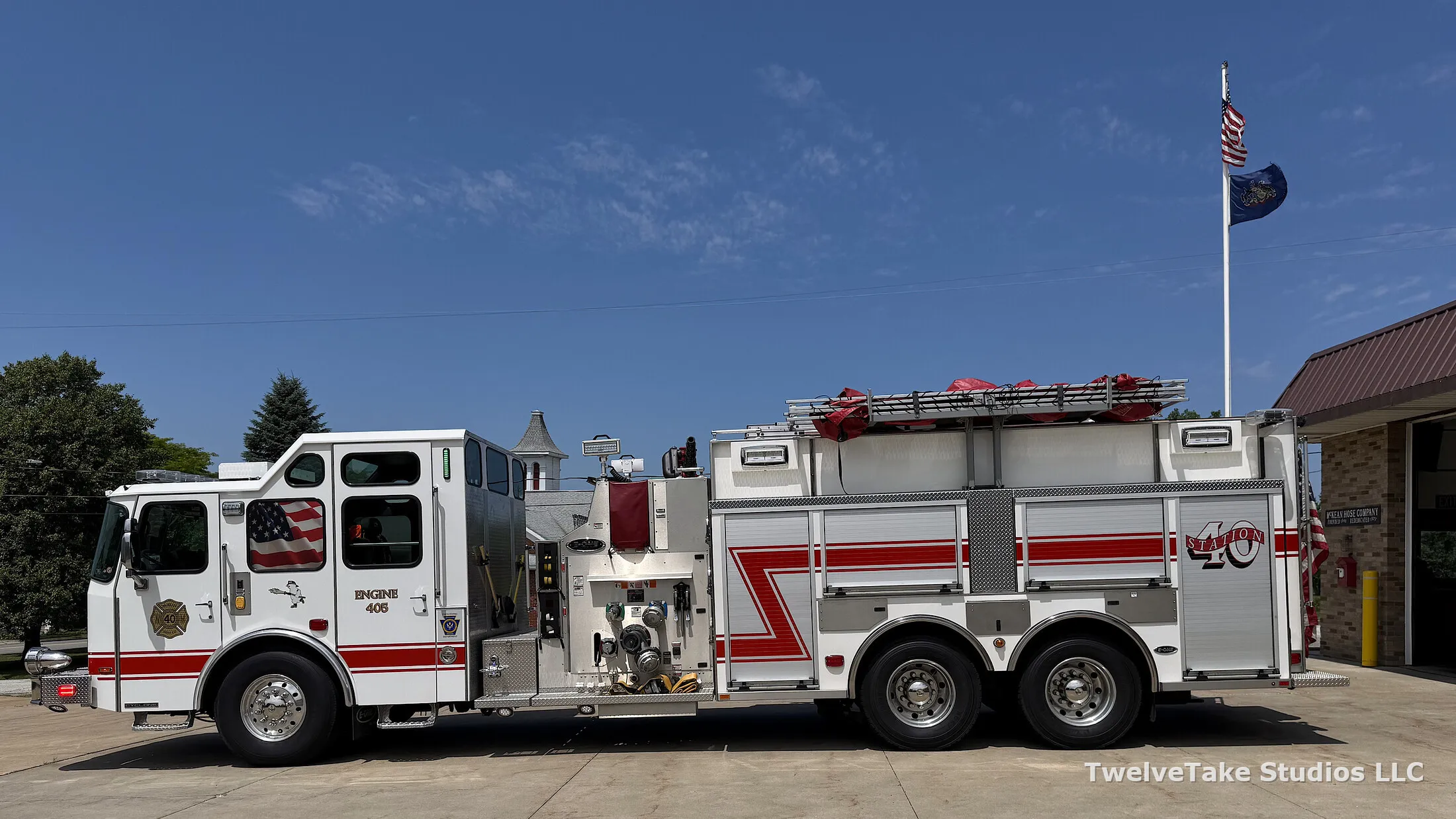
Fire hose is made in fifty-foot lengths, so we load it and pull it back off the truck by the length, not by the foot.
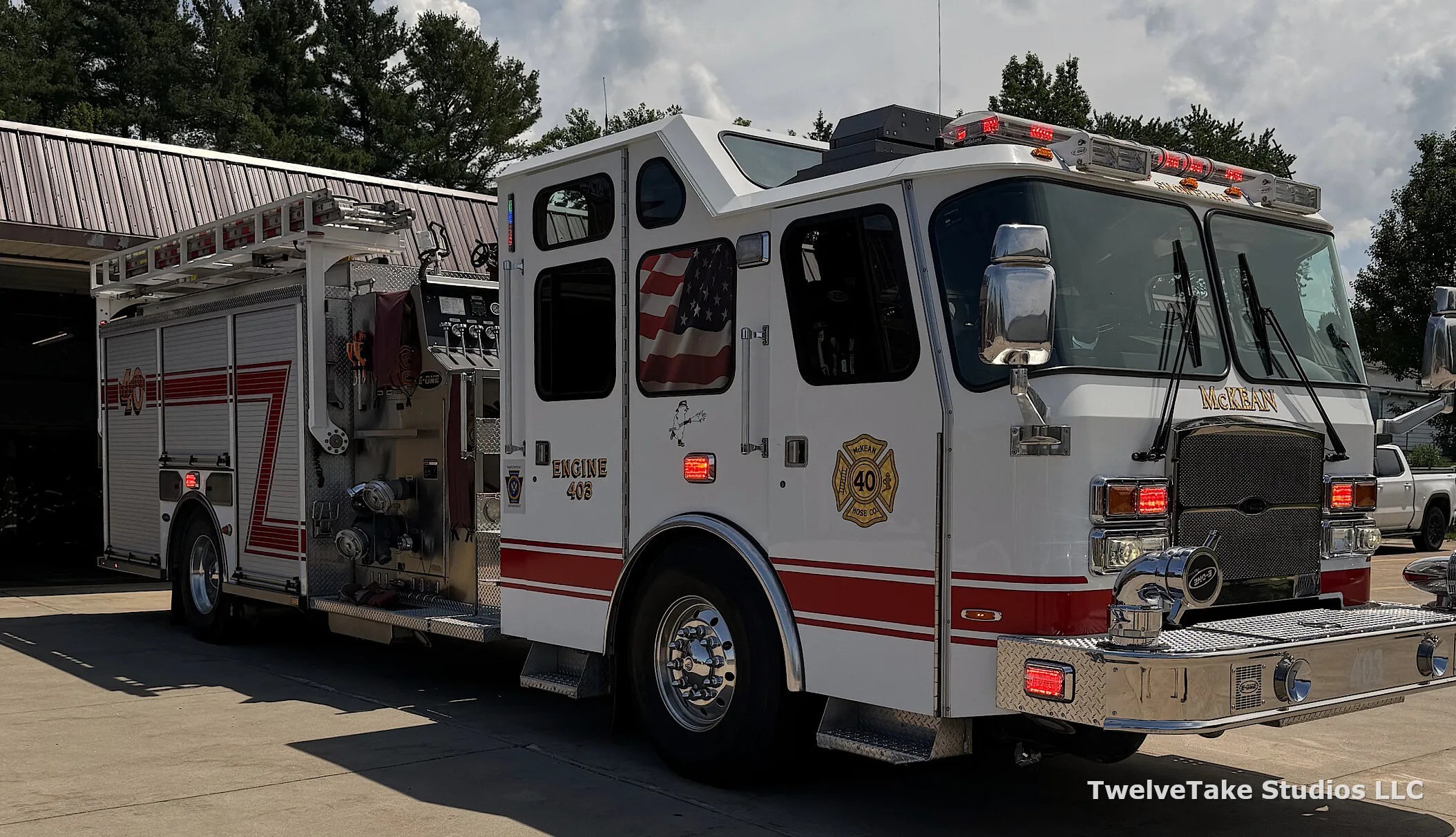
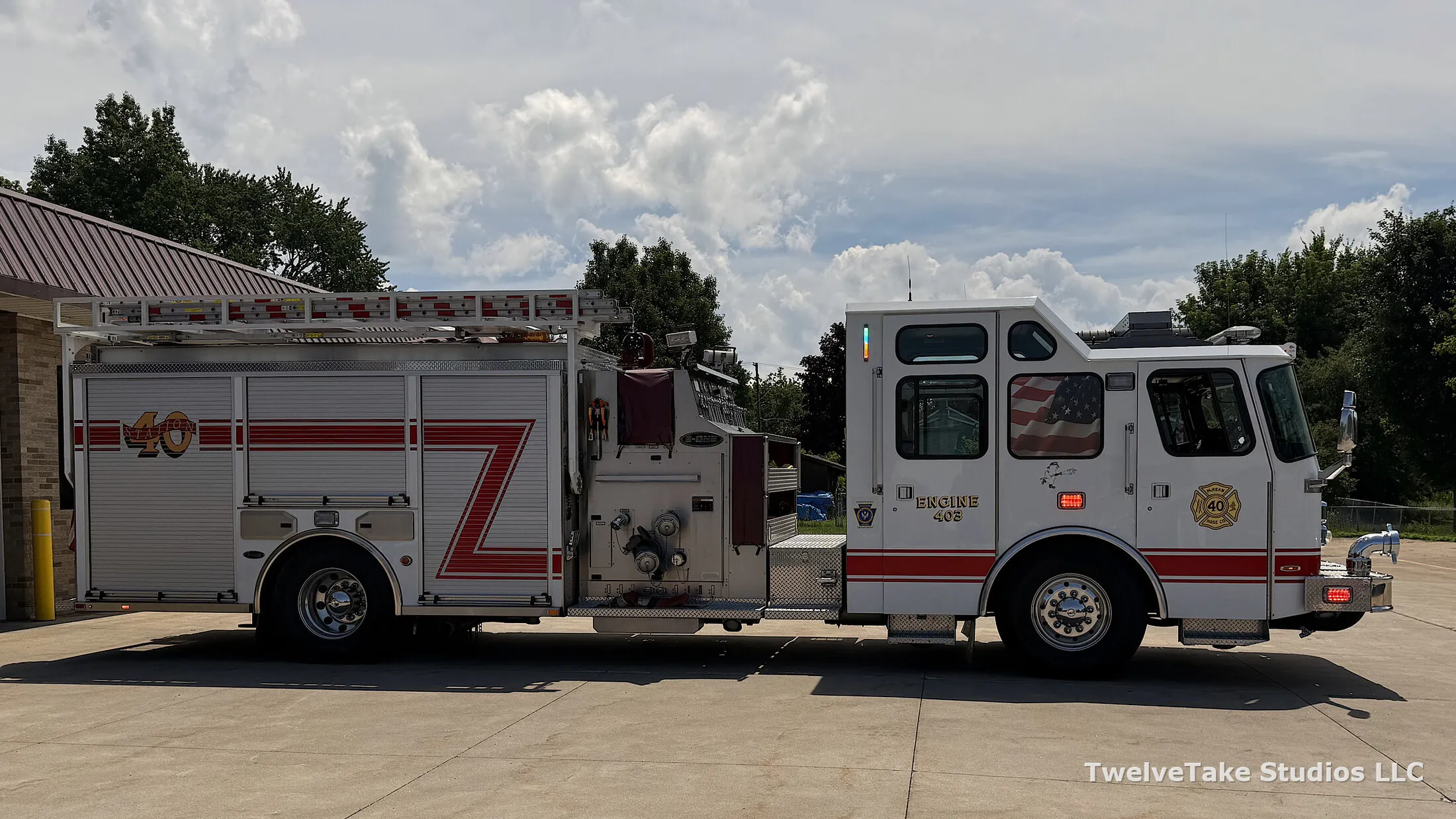
Engine 403
- Year
- 2013
- Chassis
- E-One
- Pump
- 1,500 gallons per minute
- Tank
- 1,000 gallons
The second engine goes out when a fire takes more water than one truck carries, when two calls come in at the same time, and when a neighboring department asks for help and one of ours leaves town to answer.
Pump ratings come in set steps: 750 to start, then up by 250 at a time. There's no such thing as a 1,600 gallon-per-minute pump. You pick a rung on the ladder, not a number.
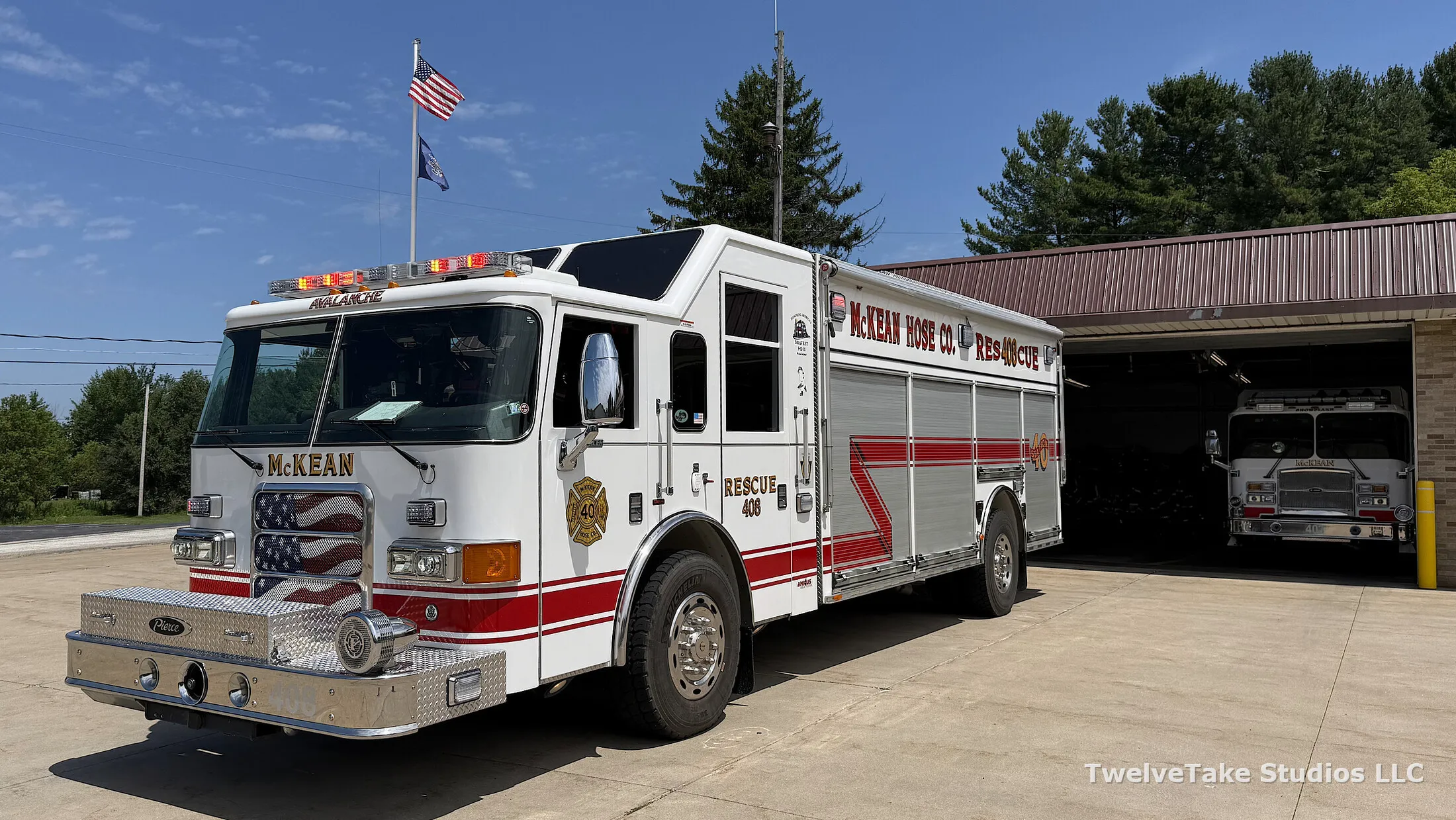
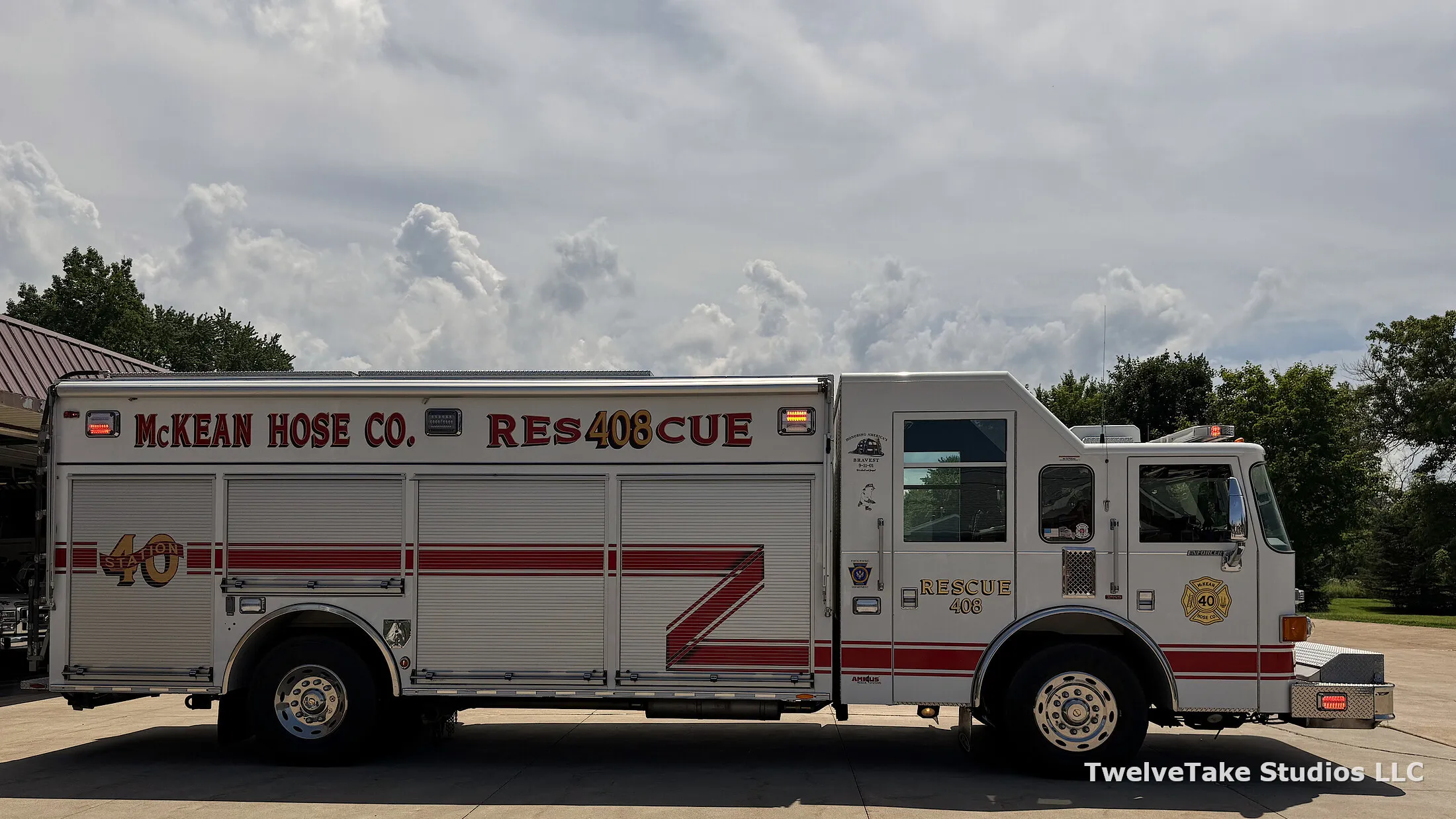
Rescue 408
- Year
- 2004
- Chassis
- Pierce Enforcer
- Body
- Rescue, opens all the way around
This one carries tools instead of water. Most of the time that means getting somebody out of a wrecked car. It carries the hydraulic spreaders and cutters, the wood blocks we use to keep a car from shifting while we work, and the lights to see by. Every compartment opens from the outside, so we can grab what we need without climbing in after it.
Those hydraulic tools got their start at a racetrack. In 1961 George Hurst watched a crew take over an hour to cut a driver out of a wrecked stock car and decided there had to be a faster way. What he built went public in 1971 as the Hurst Power Tool. The nickname everybody uses came later.
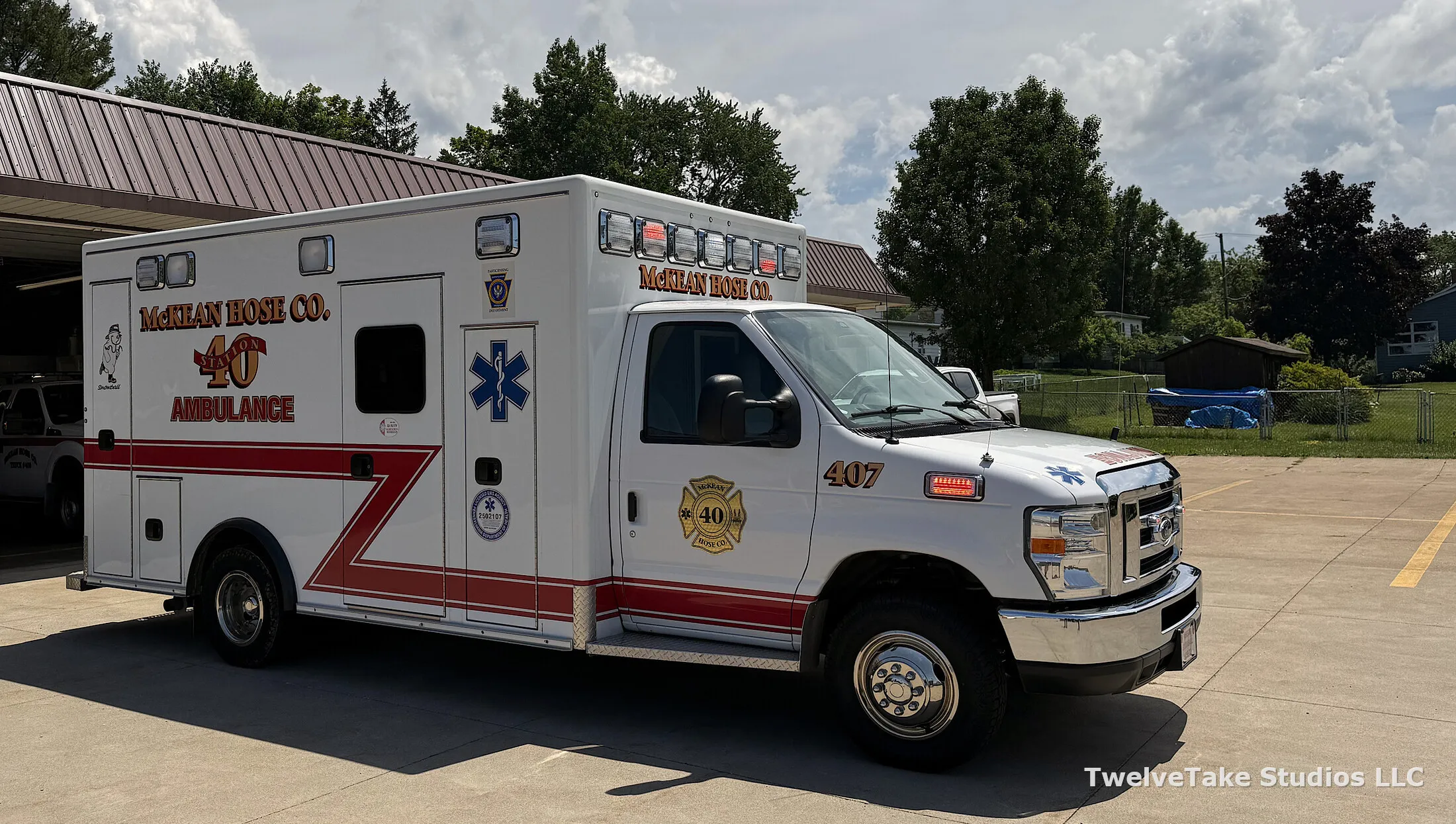
Ambulance 407
- Year
- 2017
- Chassis
- Ford E-Series
- Body
- Medix
This is the only one here built to take someone with us instead of working at the scene. It's a treatment room on wheels. We start working on someone in the driveway and keep at it the whole way to the hospital.
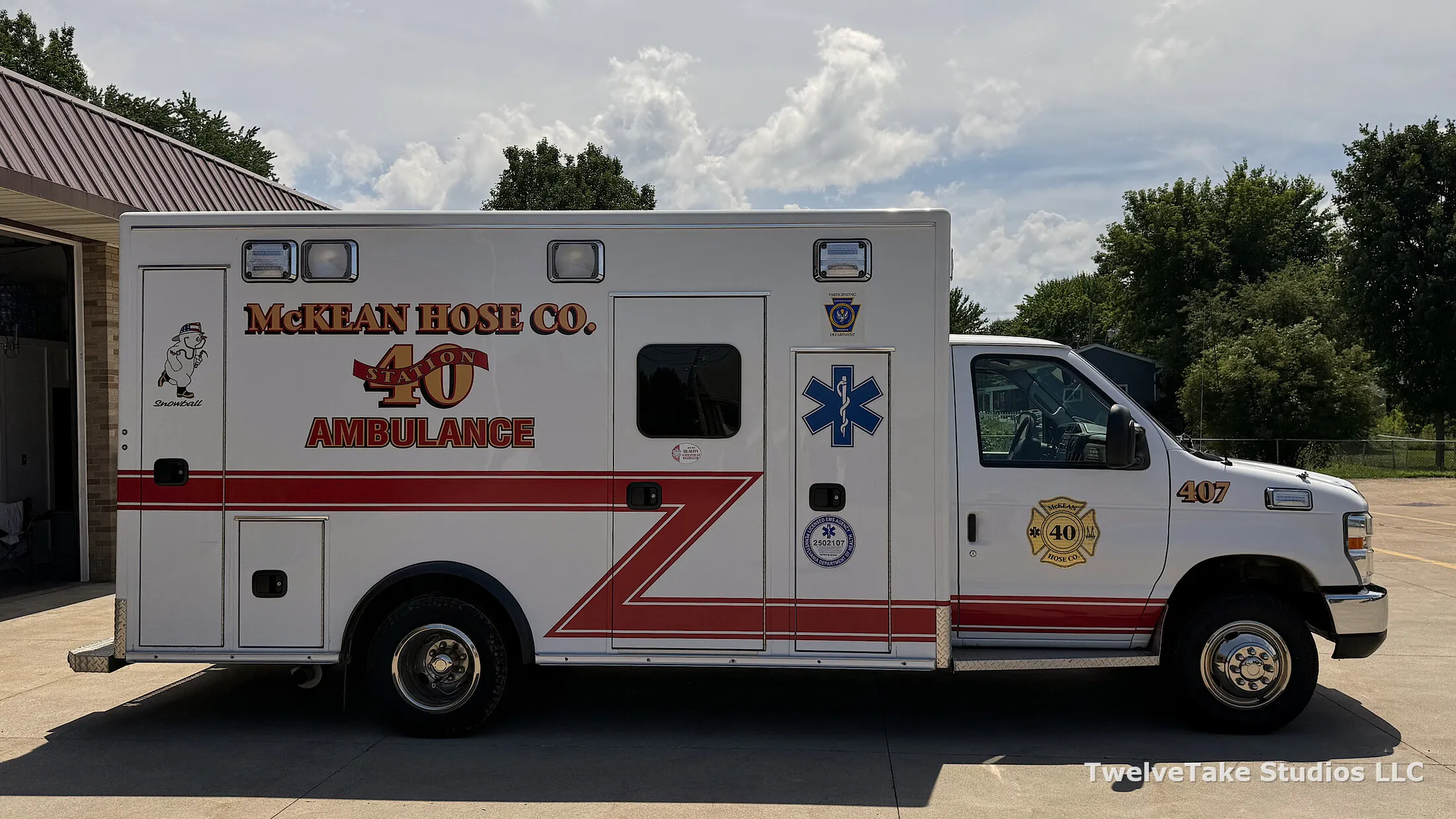
That six-barred blue star on the side is the Star of Life. It was designed at the National Highway Traffic Safety Administration and registered in 1977, after the Red Cross objected to ambulances using a copy of its cross. The staff and snake in the middle is the rod of Asclepius, an old symbol for medicine.
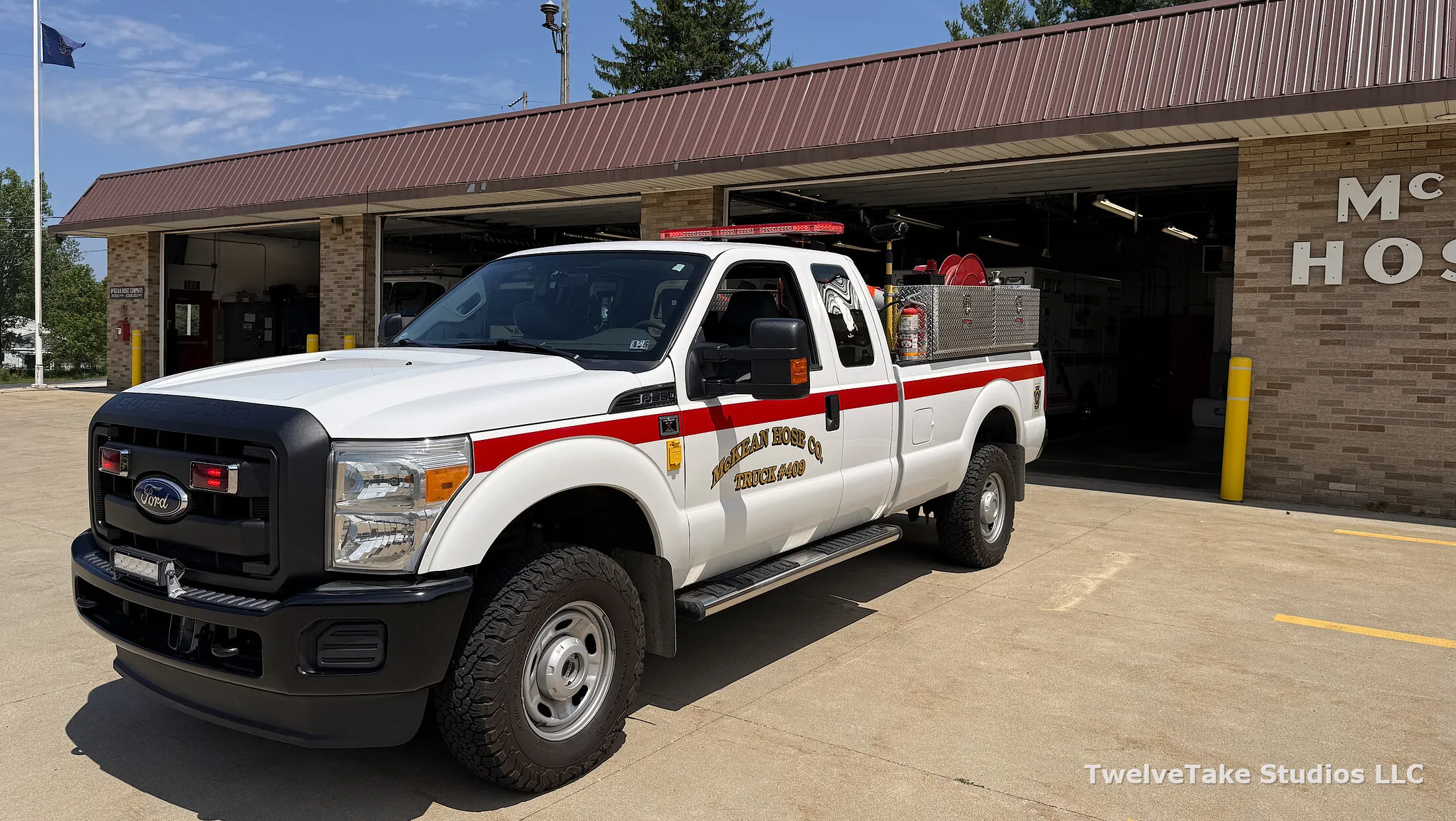
Truck 409
- Year
- 2011
- Chassis
- Ford F-350 4x4
- Role
- Brush and support
It goes out when a fire is in a field or along a treeline, or when the way in is a dirt path instead of a road. It's four-wheel drive and no bigger than a pickup, so it gets onto ground the engines can't, in mud or snow. It hauls people and gear too, when one of the big trucks would just be in the way.
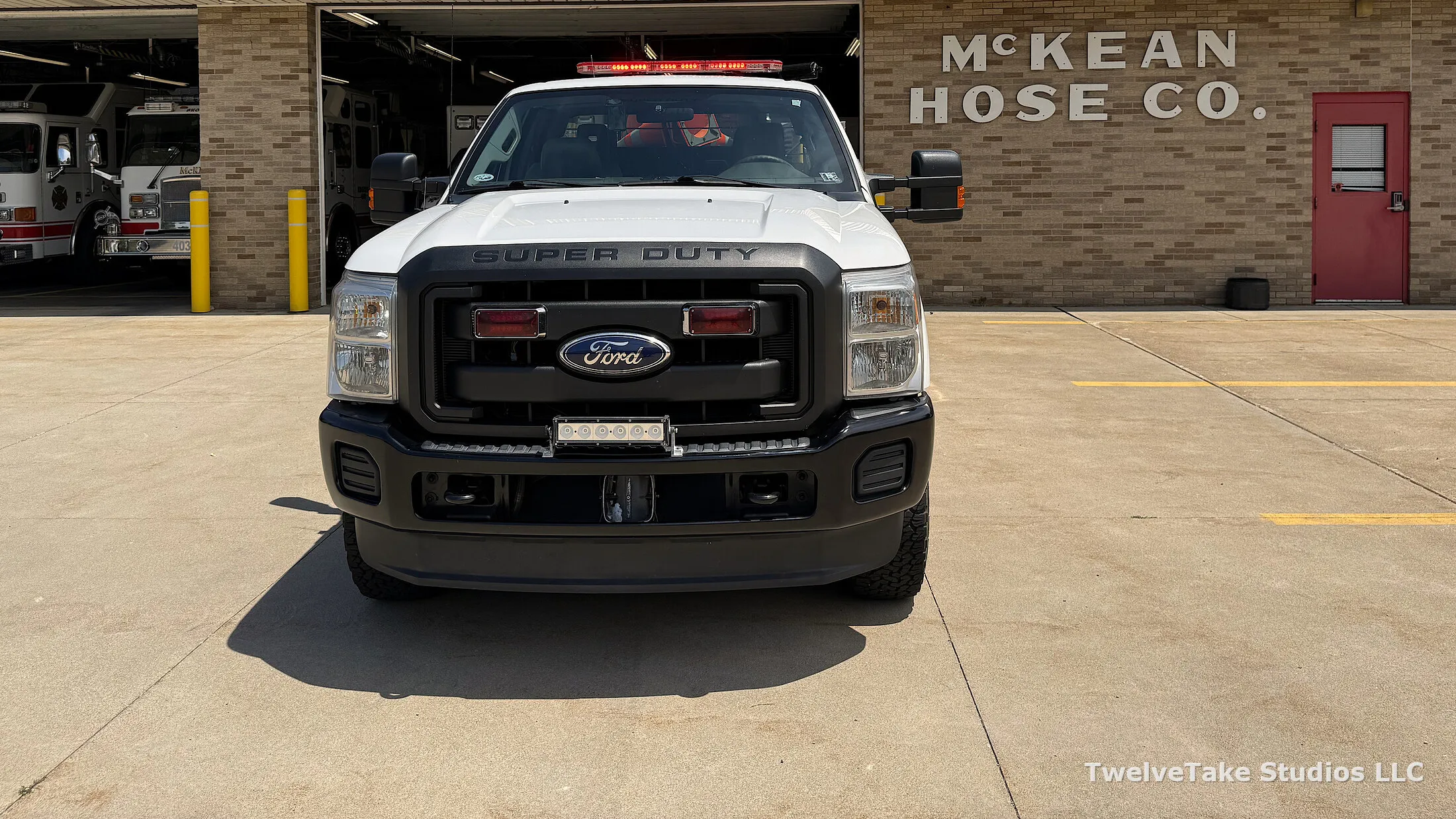
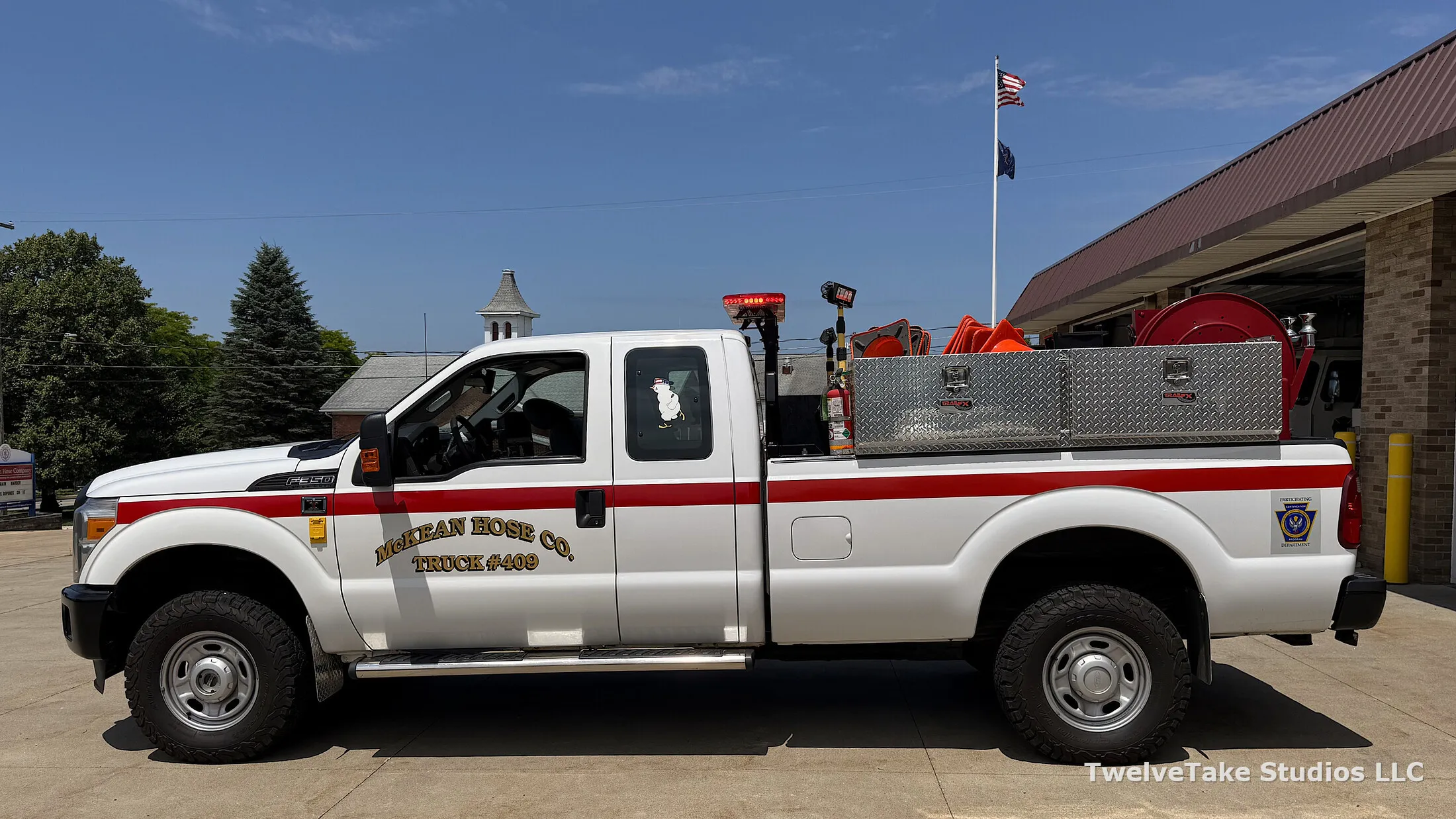
Brush trucks have a national standard all their own, separate from the one written for engines, because the job is different. A brush truck has to reach the fire over rough ground. An engine has to bring the water.
In the bays